
Built for regulated industries
Clinical, financial, safety-critical and regulated by design - every vertical below runs on the same governance primitives: role separation, per-cohort IAA, immutable audit trails, evidence export.

Healthcare & Life Sciences
Radiology, surgical video, clinical text, and claims are labeled by domain-trained teams under clinician review, not by general annotators reading from a glossary, with de-identification completed before a study reaches a reviewer. HIPAA-aligned access controls and an ISO 27001-certified ISMS sit underneath native DICOM tooling built for structured findings, measurements, and landmarks. IAA evidence and an immutable audit trail travel with every study, the documentation an FDA submission or an EU AI Act file actually needs.
Read More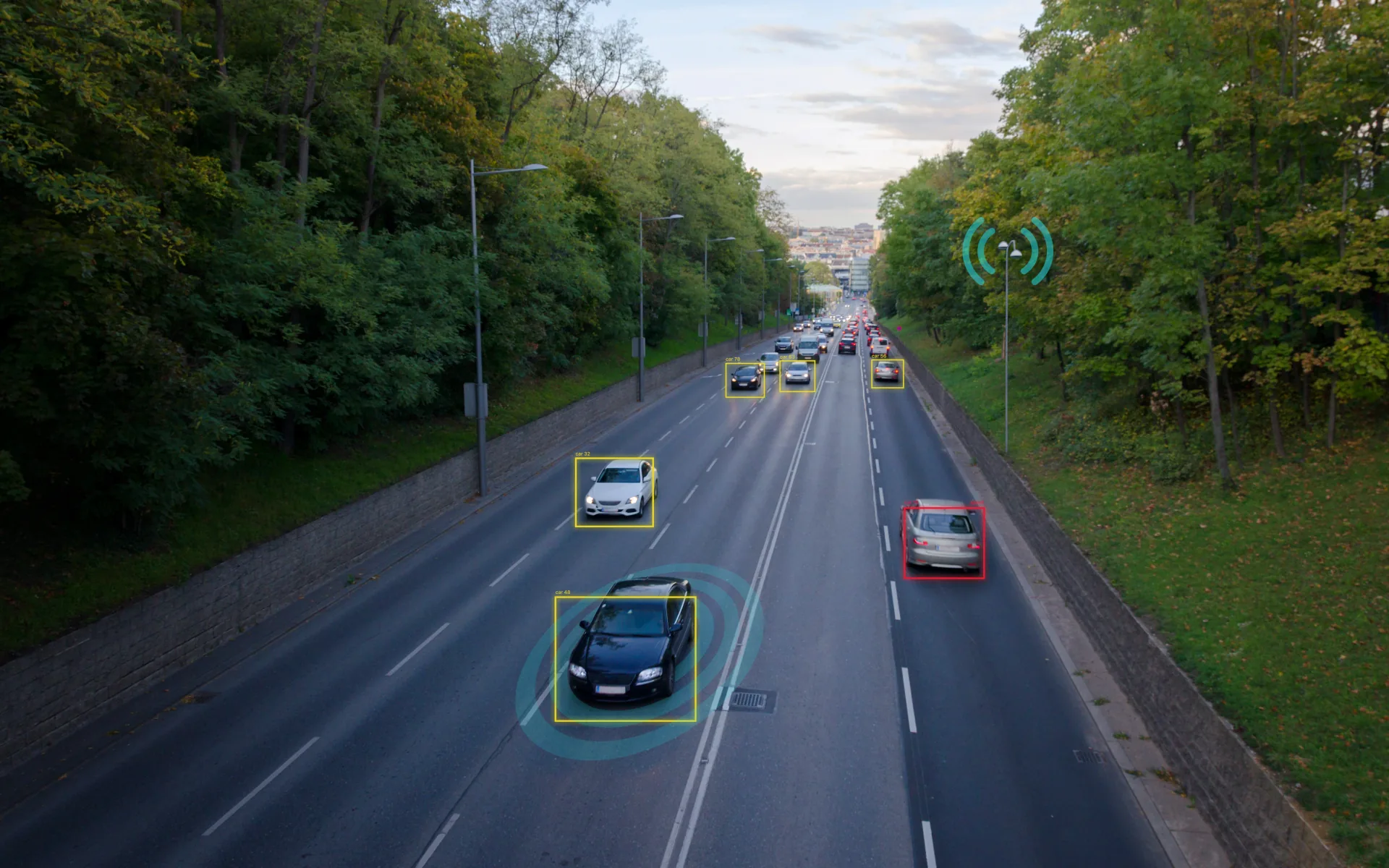
Autonomous Vehicles & Geospatial
3D cuboids on LiDAR point clouds, multi-view reviewed, and video tracks carrying persistent identities across a clip are produced at production scale, camera and LiDAR fused wherever a scene calls for both. Calibration between sensors happens before annotation starts, so cross-modal consistency isn't something an annotator has to catch by eye, and a new object category specific to one site can be added mid-program without freezing the taxonomy up front. Every export lands KITTI- or MOT17-ready with the per-object audit trail a safety case is built on.
Read More
Public Sector & Defense
Aerial video, satellite imagery, archival records, and policy documents all move through the residency, access-control, and audit constraints specified in a government contract upfront, not requirements added after award. The same role separation and purpose-limited access apply whether the work in front of a reviewer is a frame of footage or a page of a case file, and every action is logged immutably. An evidence request is answered directly from that record, not reconstructed under a deadline.
Read More
BFSI
Fraud datasets, KYC and AML document extraction, and transaction labeling are scored under dual review against written criteria, with disagreements sent to adjudication rather than averaged away, so quality is measured, not asserted. Per-cohort agreement figures and a full chain of custody travel with every dataset, the specific evidence a model-risk function working on something like SR 11-7 asks a vendor to produce. When an internal auditor asks how a label was reached, the record already has the answer.
Read More
Robotics & Embodied AI
Keypoint and pose work runs on reusable skeleton schemas, COCO-17 or a custom definition built once and reused across every subsequent annotation, alongside video tracking and episode tagging through configurable forms. A keypoint's placement is scored against a written guideline the same way any other geometry is, so posture and movement data carries the same evidence standard as a bounding box rather than a lighter one. Governed QA and a full audit trail apply to every episode, which means a dataset can scale in volume without loosening how it gets checked.
Read MoreFAQs
Which industries does LabelFort serve?
Healthcare, autonomous vehicles and geospatial, public sector, BFSI, and robotics - the verticals where a dataset is reviewed by someone outside the team that built it.
Do the governance controls change by industry?
The primitives do not: role separation, per-cohort IAA, immutable audit trails and evidence export apply everywhere. What changes is the framework the evidence is mapped to - HIPAA and a BAA in healthcare, a safety case in autonomous vehicles, SR 11-7 style model risk in BFSI, residency and access controls in public sector.
Can you support an industry that is not listed here?
Yes. The governance model is vertical-agnostic, and the Compliance Review maps your specific framework, residency and access constraints before any data moves.
Make it provable.
Start with the free one-hour Compliance Review - your risk surface mapped to controls, a documented gap analysis, & a scoped evidence-grade PoC. Before any data moves.
Certifications & readiness