

Text Annotation Services
LabelFort is both a self serve text annotation tool and a fully managed annotation service. Use the platform directly for classification, sentiment, intent, and structured field extraction through configurable forms, or hand the work to LabelFort's trained teams under the same governance. Dual human review and Inter Annotator Agreement, measured by Cohen's kappa, ensure quality. All judgments are logged, adjudicated, and exportable as evidence, supporting defensible data for language model training.
Where subjective judgment gets measured
LabelFort makes subjectivity measurable through written guidelines, dual annotation, and kappa scored agreement per cohort, so disagreements go to adjudication against the guideline, not a majority vote, and the reasoning becomes part of the record. For regulated NLP annotation projects, domain trained teams handle classification, sentiment, intent, and structured field extraction in the same pass, bundled under LabelFort's text annotation services rather than priced separately, with forms built to the document type, not one generic template. Run it yourself as a text annotation tool, or hand the work to LabelFort's teams, the kappa score and audit trail are identical either way.
Text annotation capabilities
LabelFort's text annotation services cover four core capabilities, each logged and scored the same way regardless of which one a project leans on most.
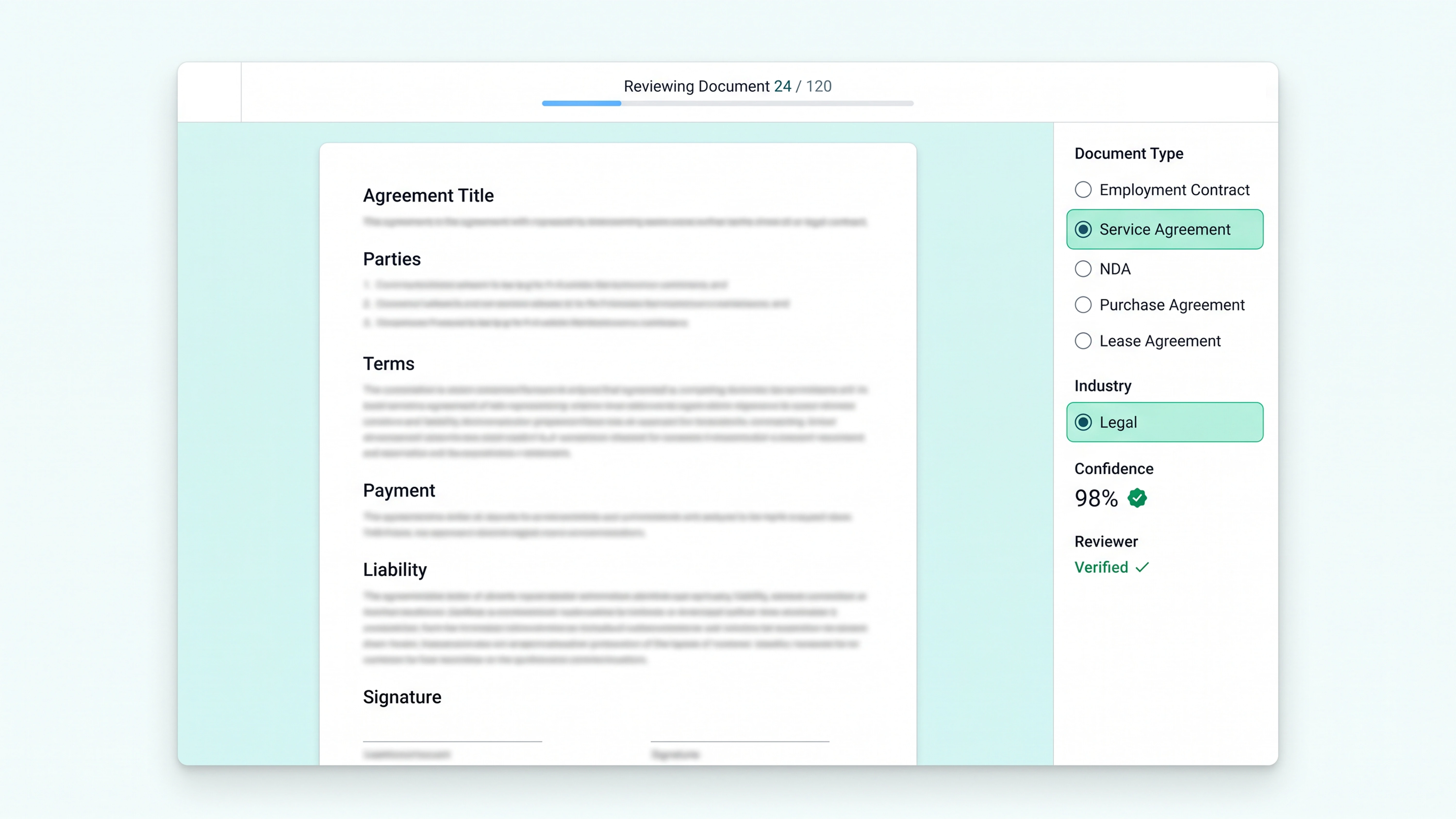
Text classification
Text classification assigns a single label to a whole document, a document type, a category, a routing decision, and it is usually the first pass a regulated text pipeline needs before anything more granular happens. Because the label applies to the document as a whole rather than a span within it, it is the fastest of the four capabilities to score for agreement, though LabelFort still scores it per cohort rather than assuming it is too simple to drift.
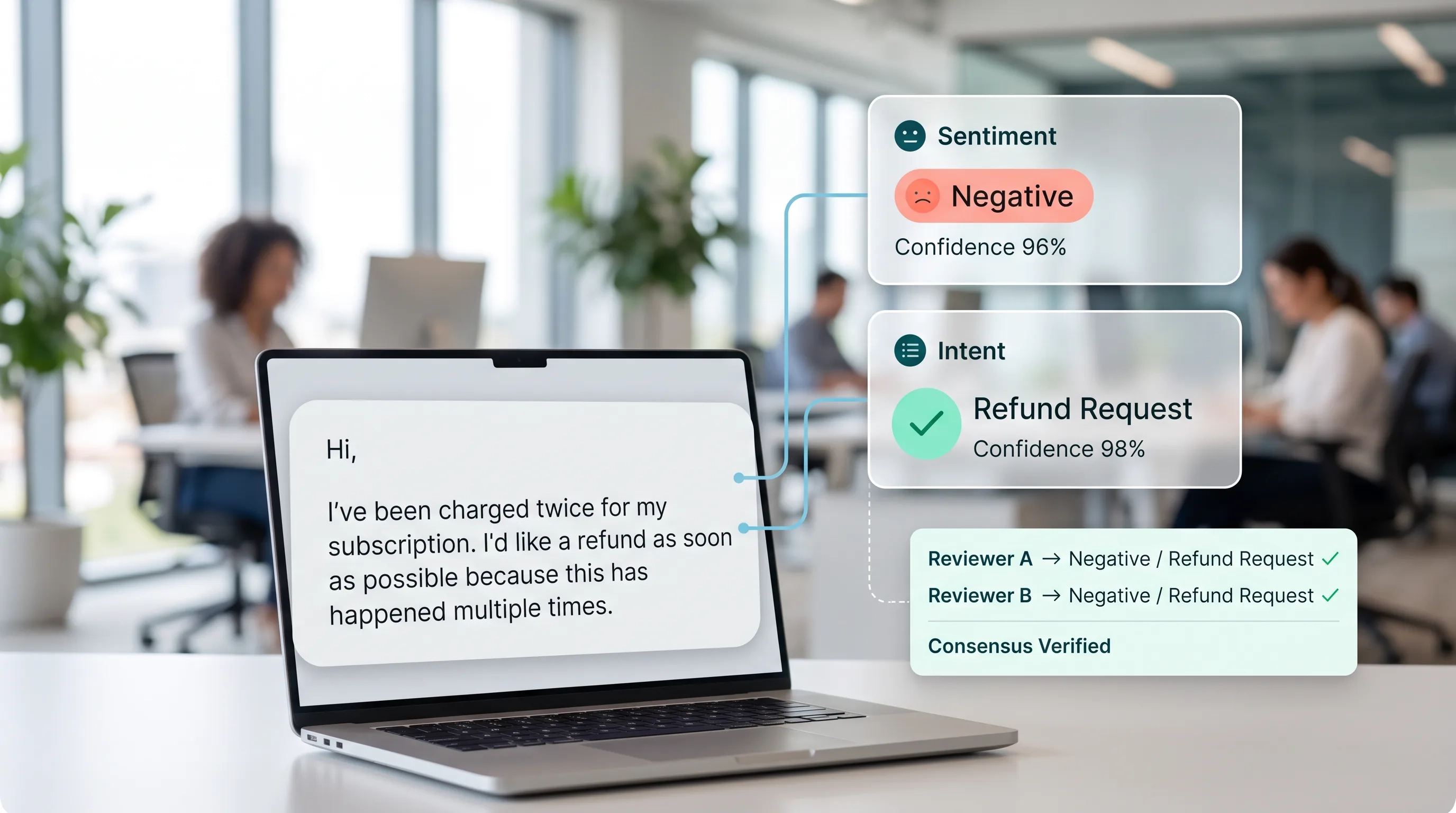
Sentiment & intent analysis
Sentiment reads the emotional tone of a piece of text, while intent reads what the writer actually wants, a refund, an escalation, a complaint closed, and the two are related but not the same judgment. This is where subjectivity is highest and where LabelFort's text annotation services lean hardest on written acceptance criteria, since two annotators reading identical text can reasonably disagree about tone without a guideline that says which reading counts.

Structured field extraction
Structured field extraction pulls specific fields against a project defined form rather than a generic template, an insurance claim form and a clinical intake form ask for entirely different fields with different validation rules. This is the capability most shaped by the document type it serves, which is why LabelFort builds the form around the document rather than forcing every project through the same shape.
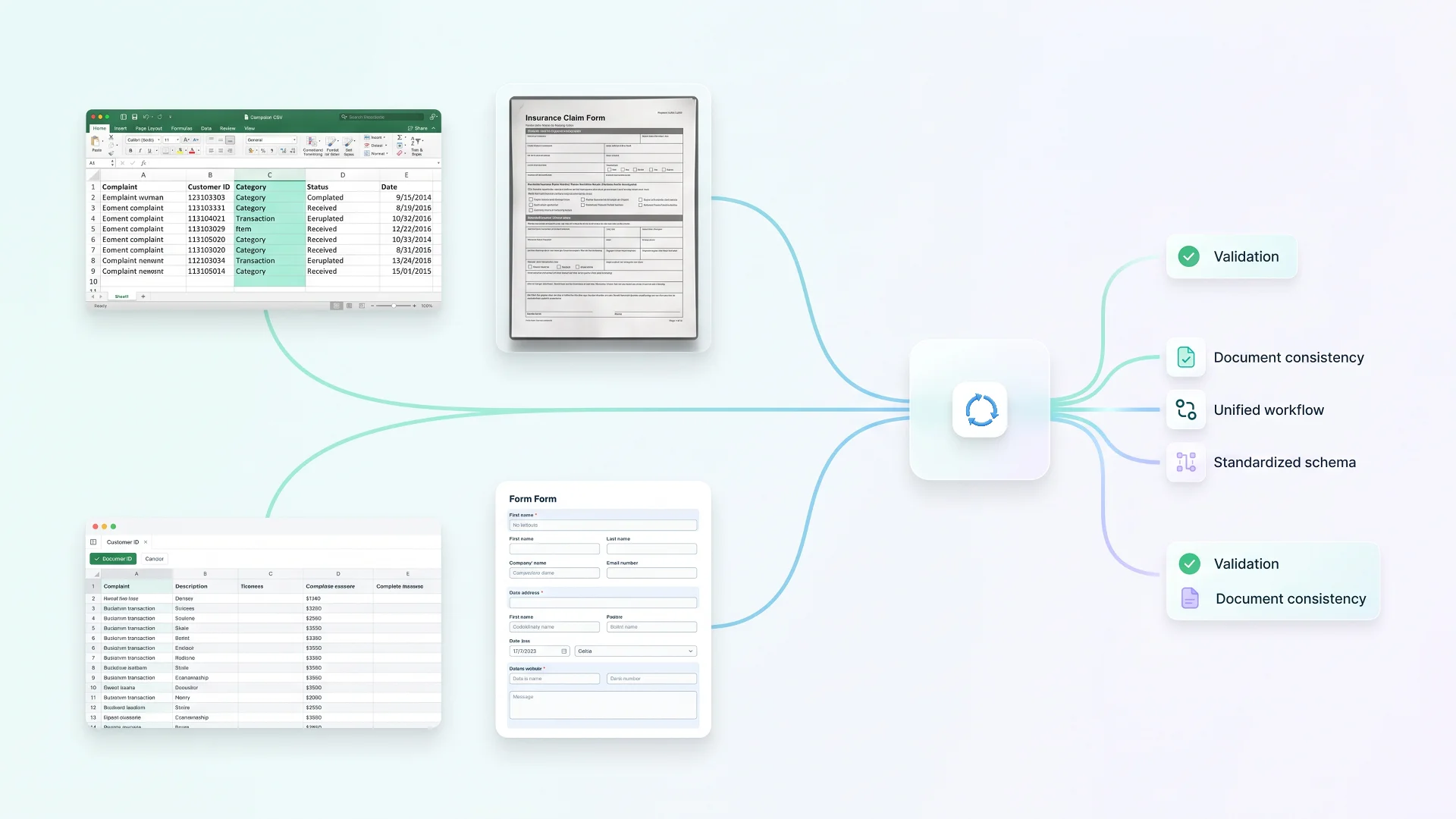
CSV row & PDF workflows
Regulated text arrives in more than one format, a spreadsheet of complaint rows, a scanned PDF, a structured export from another system, and this capability means both run through the same governed workflow rather than needing separate tooling depending on the source file type. The acceptance criteria and kappa threshold stay identical whether the underlying record started as a CSV row or a page of a PDF.
FAQs
How does LabelFort handle subjective text labels?
Dual annotation with written guidelines, disagreement adjudication by a senior reviewer, and Cohen's kappa scored per cohort, so subjectivity is measured and evidenced rather than hidden.
Can LabelFort annotate sensitive documents?
Yes. Clinical, financial, and legal text is handled by domain trained teams under role based access controls, with the full audit trail available for compliance review.
What happens when guidelines change mid project?
A guideline update mid project doesn't retroactively reclassify earlier labels. The new version applies going forward, and which version governed a given batch stays attached to it, so a reviewer or auditor looking at labels from three months ago sees the guideline that was actually in force then, not the current one applied backward.
Can classification, sentiment, and field extraction run on the same documents?
Classification, sentiment, and structured field extraction run on the same document in the same pass rather than separate projects. A single form captures a document level classification, any free text sentiment or intent reading, and the fields the project needs, so the outputs stay linked to the same source record instead of arriving as disconnected exports that need to be reconciled afterward.
Is LabelFort a text annotation tool or a managed service?
Both. LabelFort is a text annotation tool you can run yourself, with role based workspaces and the same configurable forms and adjudication workflow described above, and a managed service where LabelFort's own teams do the work under your constraints. Compared against other NLP annotation tools, the difference is usually the audit trail and per cohort kappa scoring, not the labeling interface itself. Most regulated teams use a mix, self serve for lower risk document types, managed for anything that needs domain trained reviewers.
Related services
Image Annotation
Enhanced precision and reliability for vision based models, with the evidence pack to defend them.
Read More
Video Annotation
Better recall for dynamic events, with continuity that holds across every frame.
Read More
Audio Annotation
Precise accuracy for advanced voice interfaces.
Read More
Ready to evaluate LabelFort against your regulator’s checklist?
Begin with a one hour Compliance Review to assess how our text annotation services align with your regulatory checklist. We develop an evidence grade proof of concept using your data & requirements. There are no open trials or hidden pricing.
Certifications & readiness