

Data annotation services
LabelFort delivers managed data labeling and outsourcing for all modalities, including image, video, text, audio, LiDAR, DICOM, documents, RLHF, and synthetic data. Every project includes domain-trained teams, dual review, IAA-scored QA above 0.90, and per-dataset evidence exports.
Regulated teams often require multiple modalities. For example, vision models need text annotation for documentation, and LLMs require RLHF services for alignment. A single governed pipeline with consistent evidence standards ensures auditability and eliminates the need for multiple vendors.

Image Annotation
LabelFort image annotation includes the use of bounding boxes and circles for detection, segmentation using polygons, brush masks, SAM-assisted masks, as well as the use of keypoints and skeleton-based pose for tracking posture and joints. Regardless of how simple or complex the geometry may be, it is assessed according to the same cohort-level agreement standard and comes with a fully documented chain of custody. In most image projects, several of these different annotation types are combined within a single dataset, so that one particular driving scene may include boxes for vehicles, dense polygons for the drivable surface, and keypoints for pedestrian pose, each of these being evaluated using its individual agreement number rather than being combined into a single average that would conceal a weak class.
Read More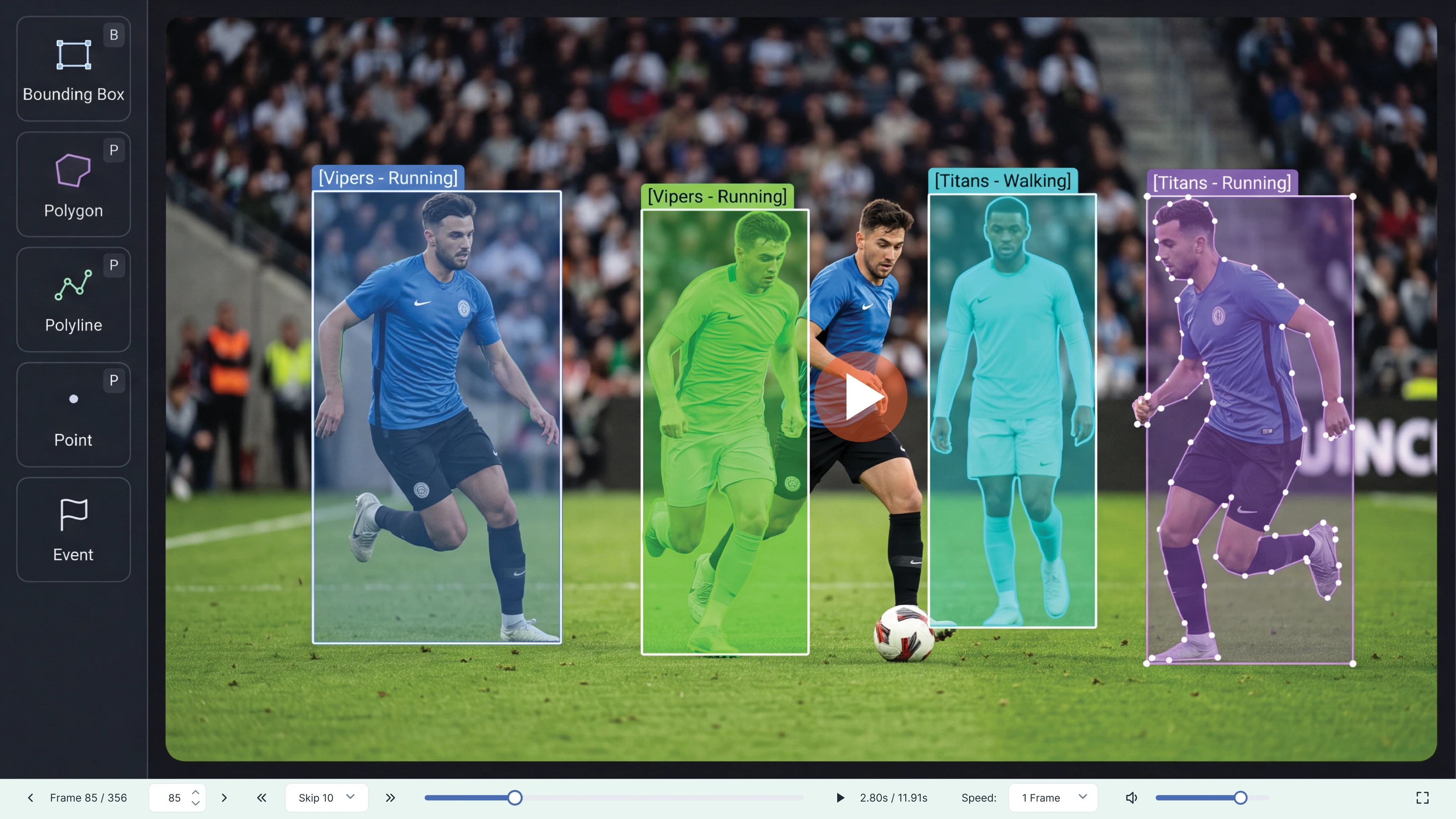
Video Annotation
The frame-by-frame labeling is done in Shape mode, Track mode maintains a single identity throughout the entire clip, and with AI-assisted tracking and keyframe interpolation the process is speeded up without bypassing human verification. Identity is established by means of checks for consistency between frames, thereby picking up any switches that a spot check would have overlooked. The difficult aspect of video is not usually to do with the shape of any individual frame; it is about retaining the same object as the same object when it leaves view, when it hides behind another object, or when it moves in front of a similar one.
Read More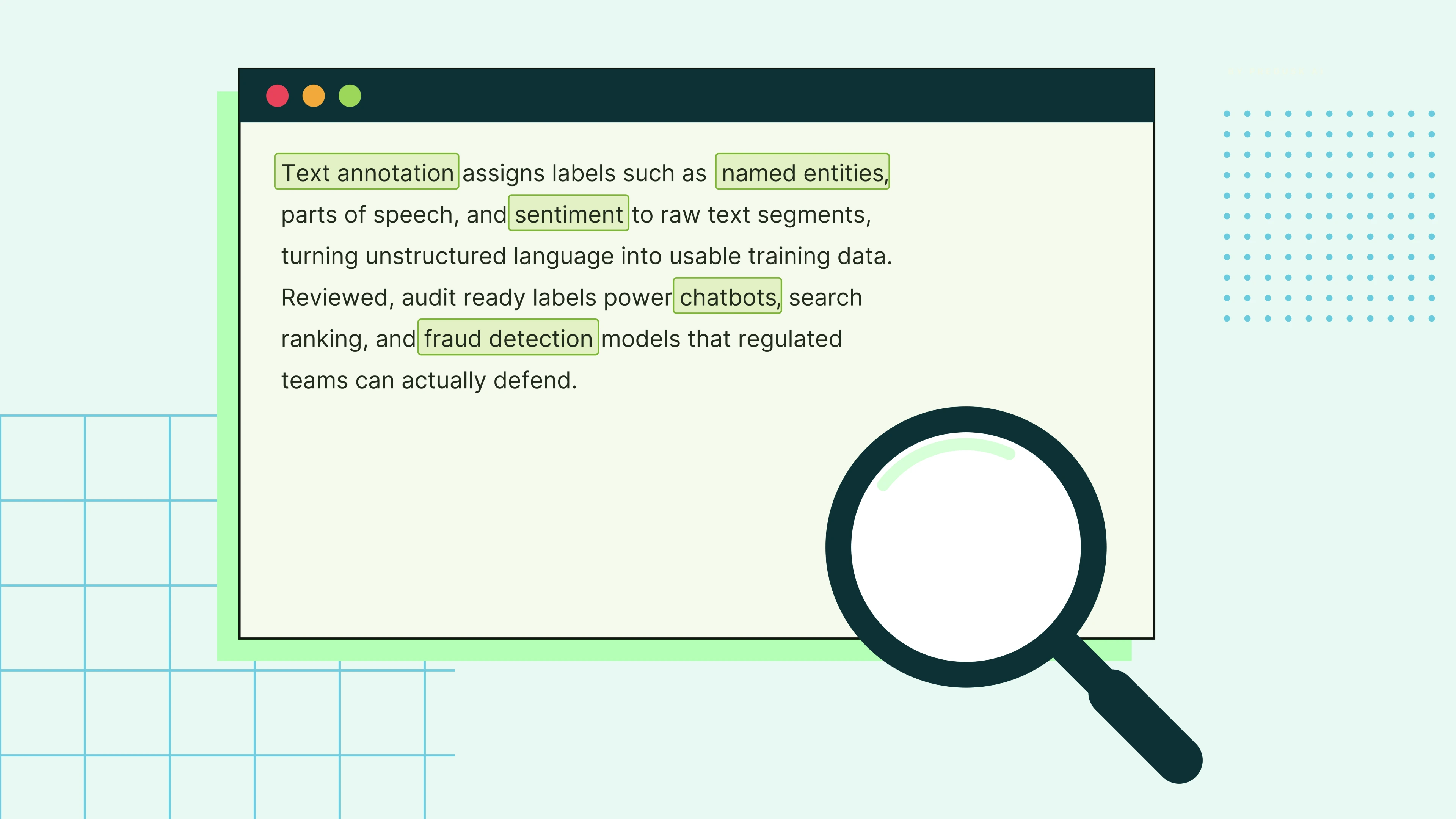
Text Annotation
Classification, together with the analysis of sentiment and intent and the extraction of structured fields by means of configurable forms, is all carried out in a single pass rather than as separate projects. Instead of being left to assumption, judgments that are subjective are made measurable through dual review and Cohen's kappa scoring. The decisions that are usually taken regarding a text dataset are the more tentative ones: for example, whether a message is a complaint or just a routine query, whether a sentence is negative or only neutral, and whether an entity refers to the company or to its product.
Read More
Audio Annotation
The pipeline is used for time segment labeling with classes and attributes, for the AI-drafted and human-verified speech-to-text transcription, and for multi-speaker diarization which separates out and assigns labels to each speaker. The segment boundaries, the speaker labels, and the accuracy of the transcription are each assessed separately, so an average accuracy of a dataset cannot conceal any weaknesses in any one of these areas. Audio can fail in more than one way at the same time, and a single combined score silently masks which particular aspect has failed.
Read More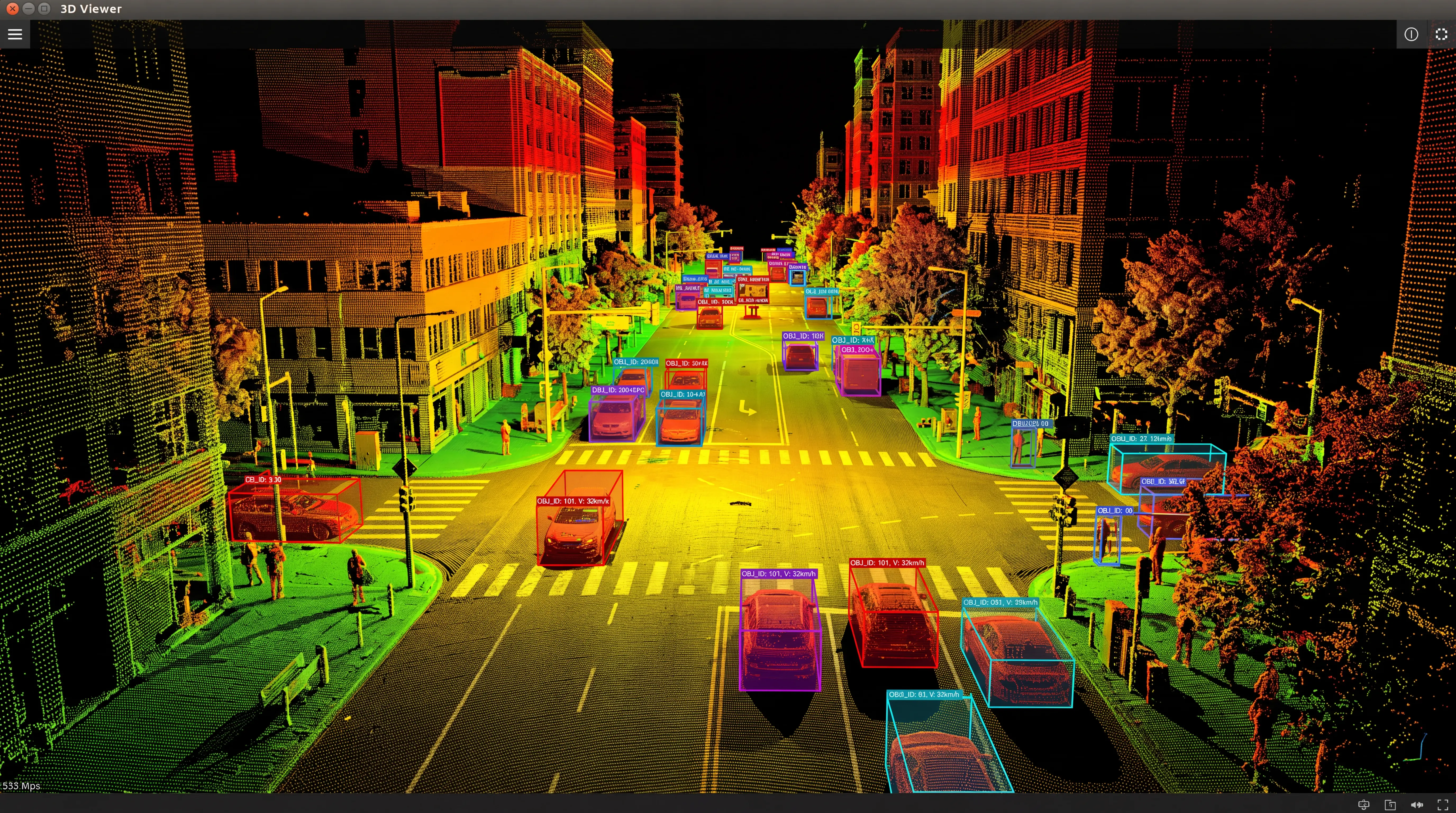
LiDAR & 3D Point Cloud
The position, size, and orientation of 3D cuboids are examined in synchronised perspective, top, side, and front views, with an occluded edge in one view being checked against the other three. Within the same multimodal project, the camera and LiDAR data share scene context having been calibrated before annotation begins rather than having it resolved by the reviewer. Occlusion is the main problem in three dimensions since an edge which is not visible at one angle is usually visible from another.
Read More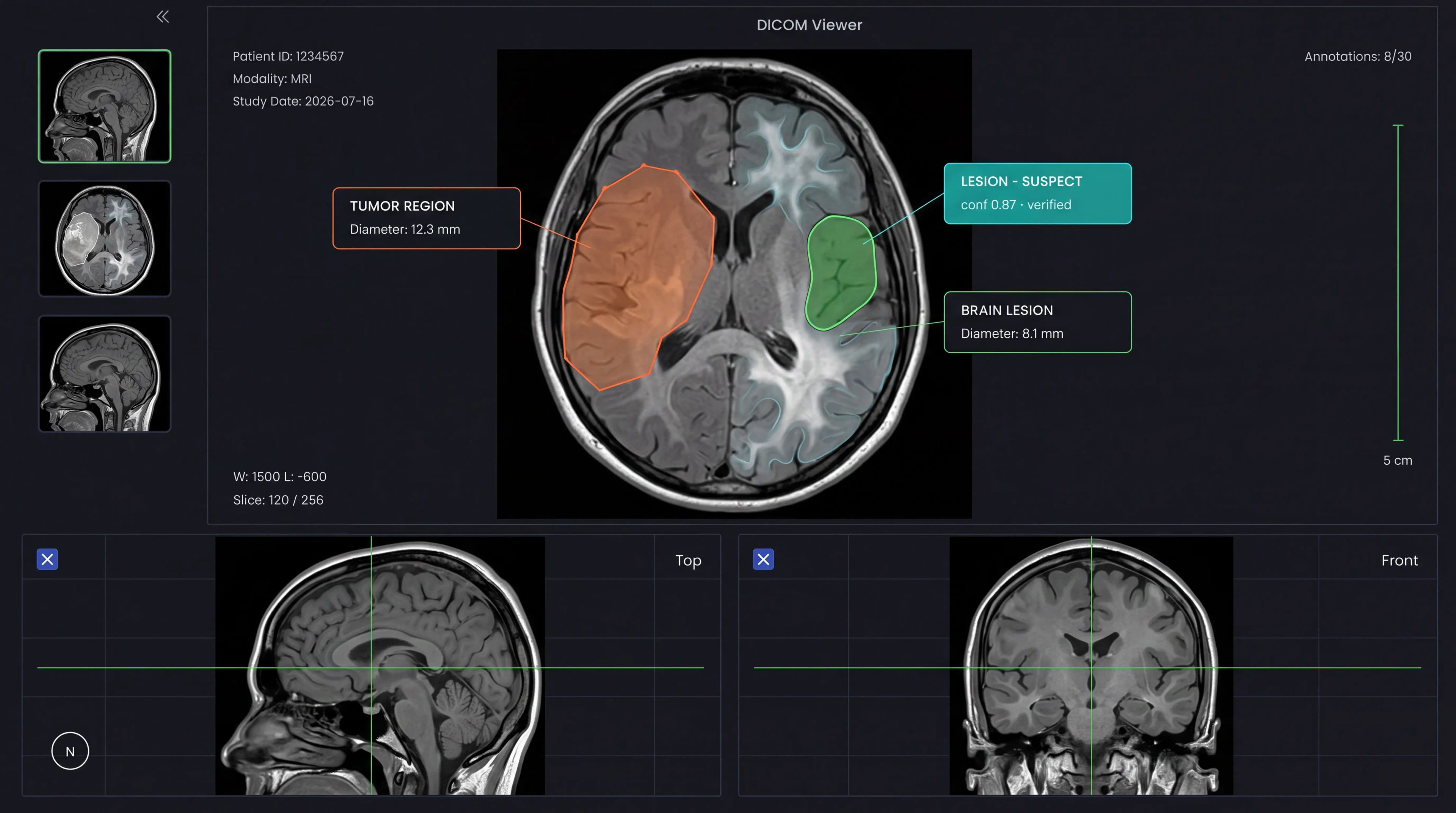
DICOM & Medical Imaging
The core of LabelFort's DICOM work consists of structured, series-scoped finding forms, measurements such as length and area for rectangular or elliptical regions of interest, and landmark annotations for fixed anatomical references. Each finding includes the identity of the reviewer and the criteria version it was assessed against, since this is exactly the kind of information required by a clinical validation study or a QMS file. In clinical practice, the label by itself is never the final product; what is important is whether the record associated with it stands up to review.
Read More
Document AI & IDP
The document annotation stack offered by LabelFort consists of intelligent field extraction, the capture of tables and structured fields, and the use of a vision language model to carry out preliminary labeling through OCR and text QA processes. The vision language model first produces a draft of the fields and tables, after which a human verifier checks and corrects this draft according to the acceptance criteria before it is deemed valid, thus eliminating the need for manual entry without abandoning the review stage. Document automation is particularly tempting in the areas where it poses the greatest risk, since a model that fills in fields quickly does so incorrectly as well, with the same level of confidence.
Read More
RLHF & Model Evaluation
The identities of the raters and the versions of the rubrics are recorded when preferences are collected, instruction tuning data are gathered, and evaluation rubrics and scores are assigned, which ensures that the final reward model does not pick up any noise that cannot be traced back. Since rubrics are versioned as the criteria change, a preference that was assessed using an older version of the rubric is never quietly reinterpreted in light of the current version. The quality of a reward model depends entirely on the quality of the judgments it is based on, and once unlabeled judgments have been incorporated, they can never be corrected.
Read More
Synthetic Data Generation
With prompt-only tabular question and answer generation, or generation based on your own CSV files using a reference seed, a preview is shown before any execution control is applied on each pass. Generated records are marked as generated in the record trail, so that real and synthetic data never become indistinct. Synthetic data is only useful when no one who comes after has to question which rows are actual ones, and this certainty must be built into the record rather than relying on it being remembered later.
Read MoreFAQs
What makes LabelFort's data annotation services different?
Every engagement ships evidence, not just labels: per-cohort IAA above 0.90, immutable audit trails, and a chain-of-custody export mapped to EU AI Act Articles 10 & 12, HIPAA, GDPR and DPDP.
Do you offer data annotation outsourcing?
Yes - domain-trained annotation teams under your residency, access and BAA/DPA constraints, priced by governance burden rather than per label. See Hire a Team for how engagements are staffed and governed.
Which export formats are supported?
COCO (including RLE), YOLO, KITTI (2D and 3D), MOT17, labeled-image ZIP, Excel/CSV and NDJSON audit logs - with additional formats on request - delivered to S3, GCS, or your pipeline.
Ready to evaluate LabelFort against your regulator's checklist?
Begin with a one-hour Compliance Review to assess how our data annotation services align with your regulatory checklist. We develop an evidence-grade proof of concept using your data & requirements. No open trials or hidden pricing.
Certifications & readiness