

Synthetic Data Generation
LabelFort generates governed synthetic datasets: tabular, question and answer, from prompts alone or seeded by your reference data. Preview before execution control, record level validation, CSV export, and the same audit logging and role separation as human annotation all come standard. Use it to fill cohort gaps, augment scarce classes, and prototype safely without exposing new privacy.
Real & synthetic, never blurred
Synthetic data solves privacy and scarcity problems but creates a provenance one, an ungoverned generator made record isn't an answer when a regulator asks what a model was trained on, so LabelFort treats synthetic data generation as an auditable production step with named actors and logged runs. Four journeys cover the common cases, prompt only or reference seeded, tabular or question and answer, and typed output fields keep every generated record inside a declared type, range, or category rather than drifting outside the schema. Use it for cohort balancing under EU AI Act Article 10, scarce class augmentation, or privacy safe prototyping, generated data is labeled as generated in the record trail so real and synthetic provenance never blur. The model registry stays org scoped, a fine tuned model never serves another customer's project, and every run logs which model generated the batch and who reviewed the sample before it executed at scale.
Synthetic data capabilities
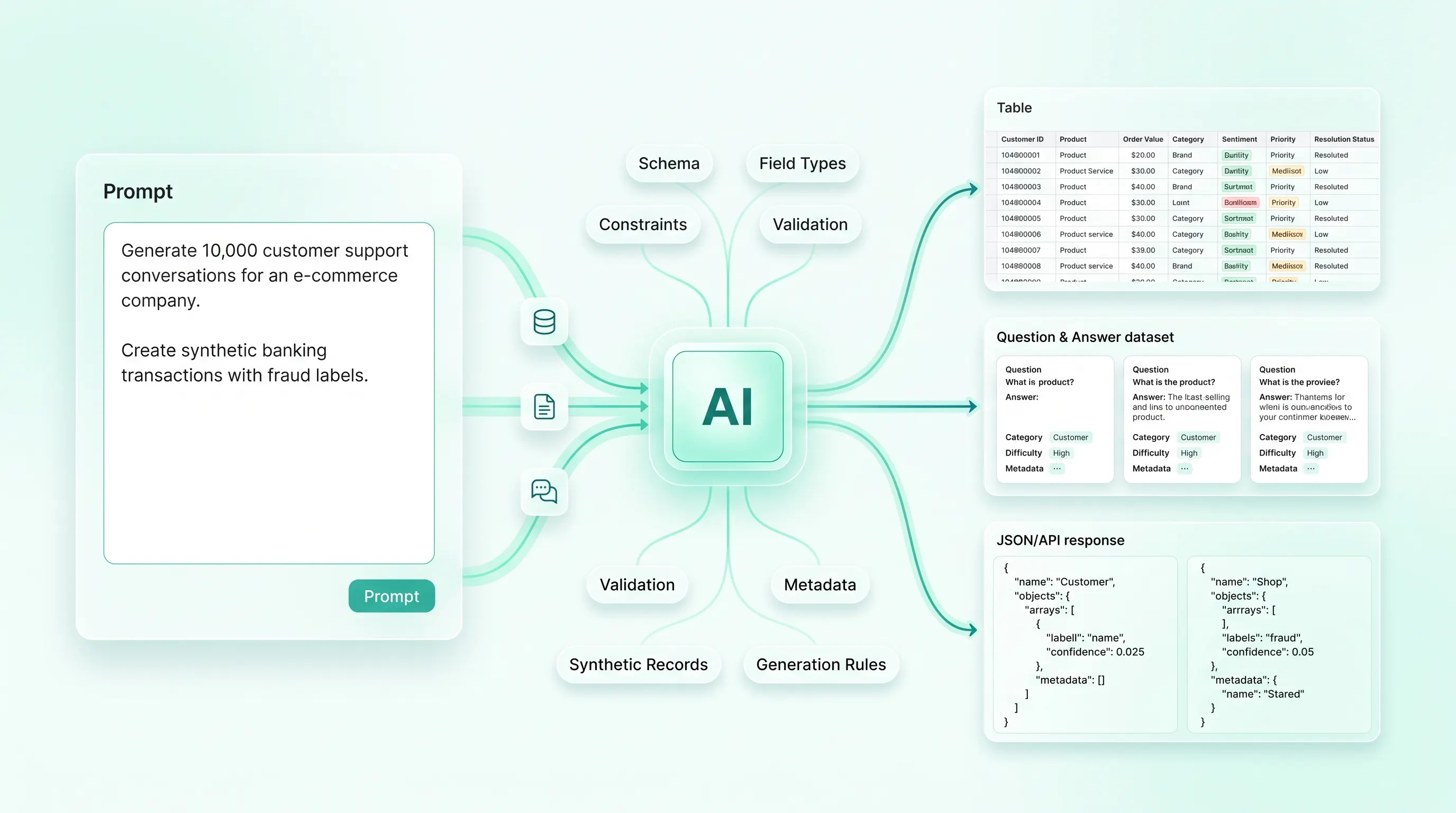
Prompt Only Tabular, Question, & Answer Generation
No seed data required, describe the dataset, define typed output fields, and generate. The right starting point when no reference data exists yet, or when a project needs synthetic records that don't derive from any existing dataset at all.
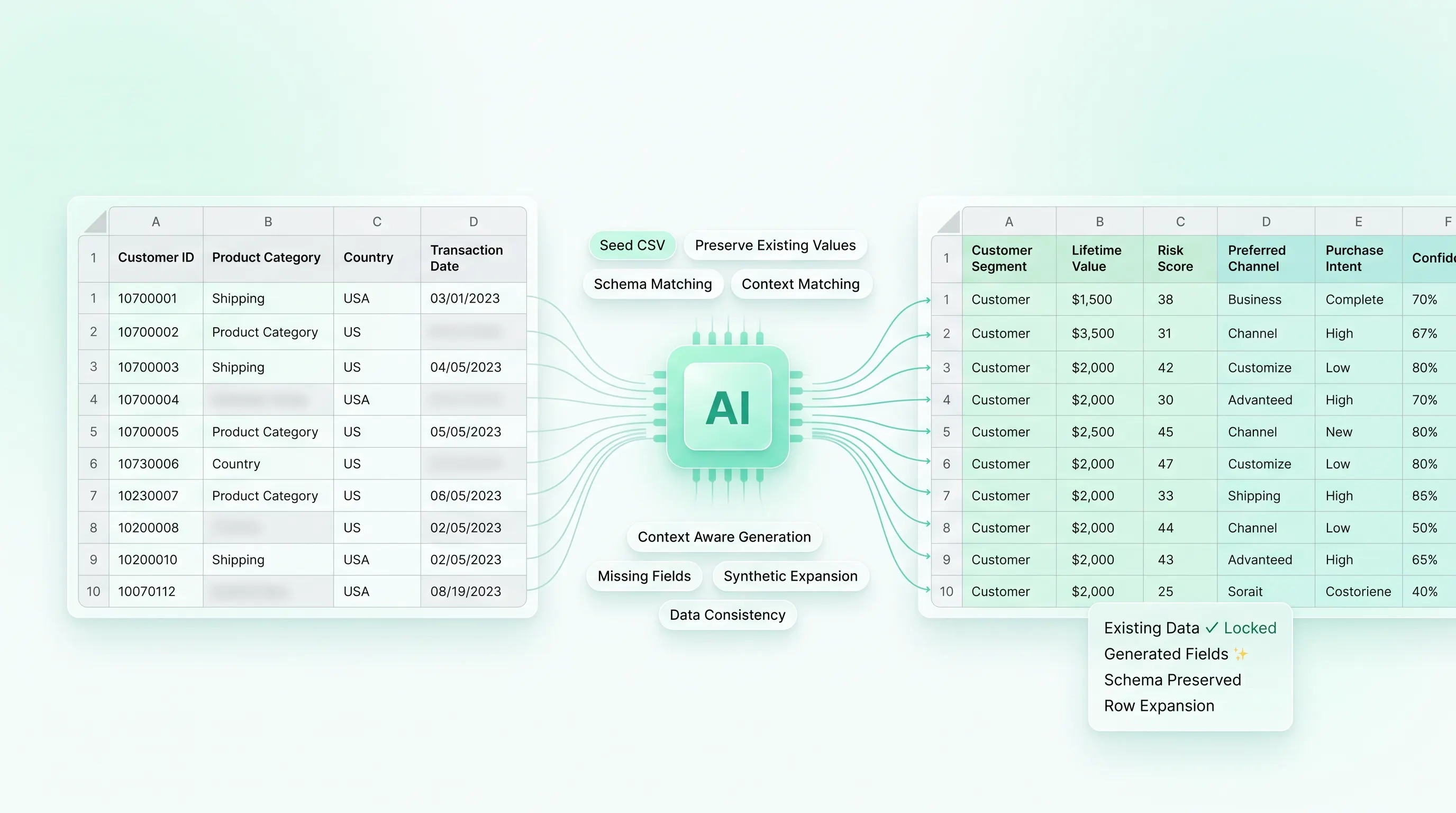
Reference Seeded Generation from Your CSVs
Chosen fields from a seed CSV are preserved exactly as given, and the rest is generated around them, grounded in real context columns rather than generated from a prompt alone. Useful when part of a record is already known and only the remainder needs filling in.
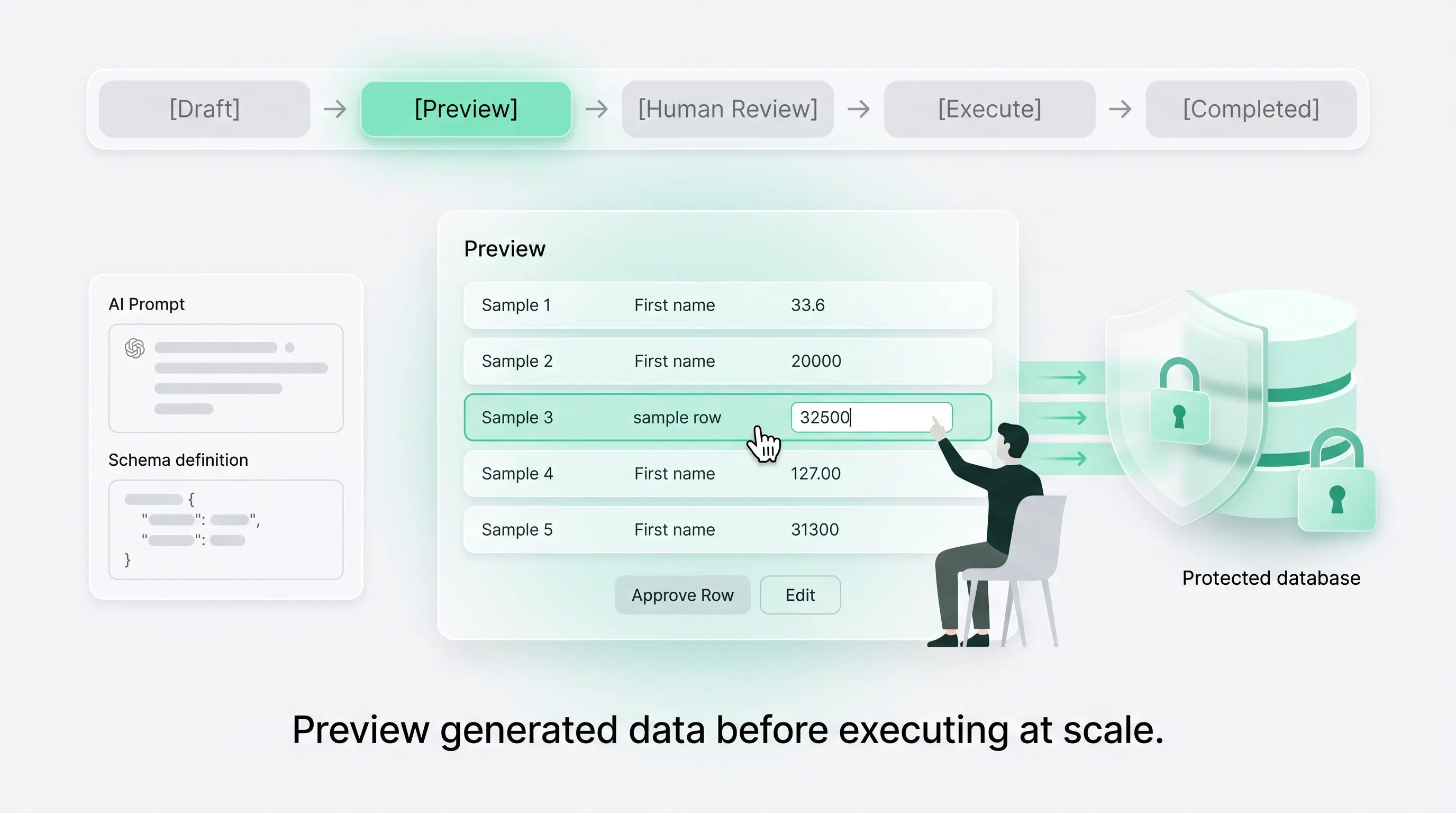
Preview Before Executing on Every Run
Every run moves from draft to preview to execute to completed, with sample records available for human review before anything generates at scale, so a schema or conditioning mistake surfaces on a handful of records, not across an entire batch.
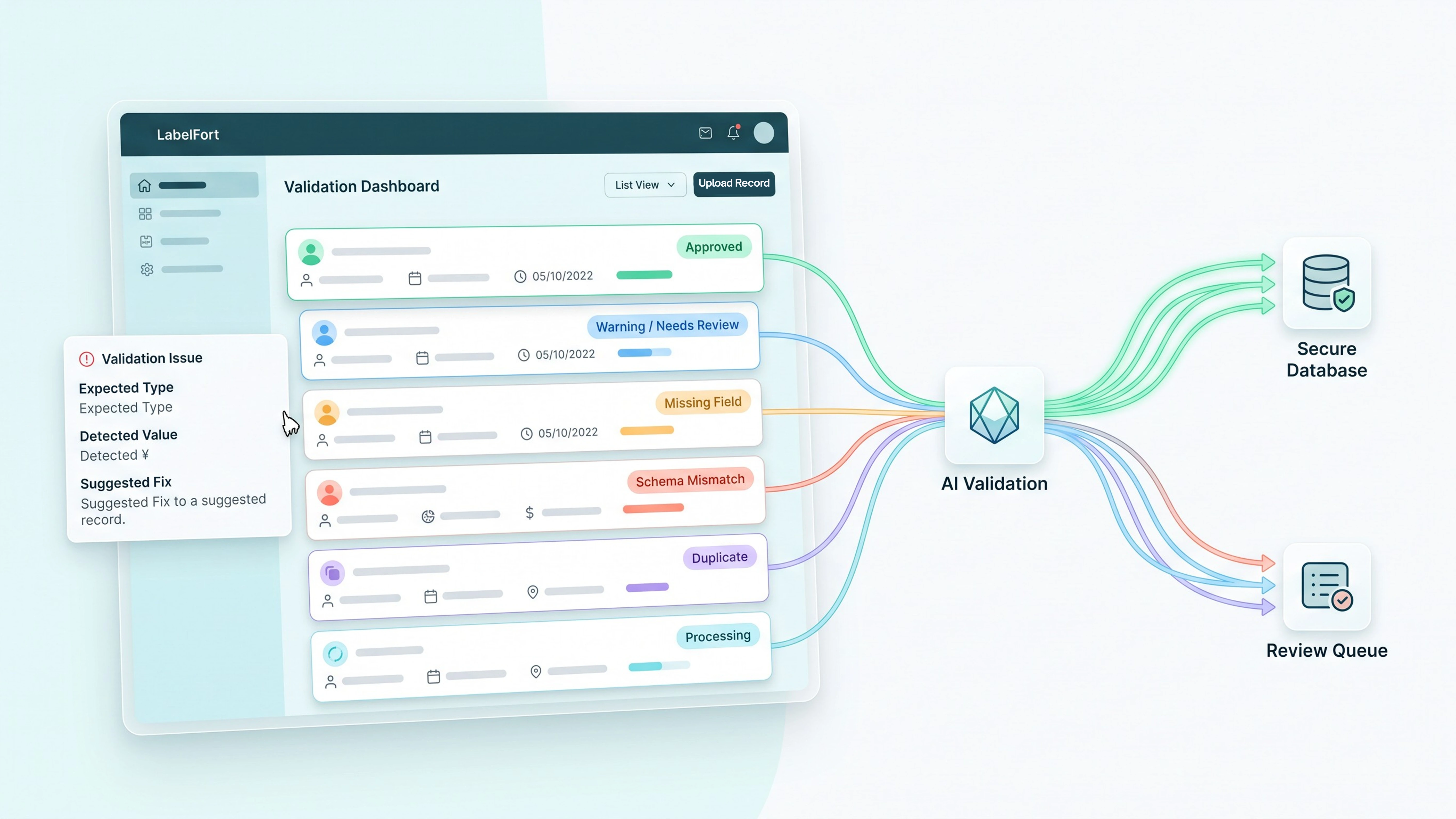
Record Level Validation States
Each record carries its own validation state rather than the run being judged pass or fail as a whole, so a reviewer can see exactly which records met the declared type, range, or category constraints and which didn't.
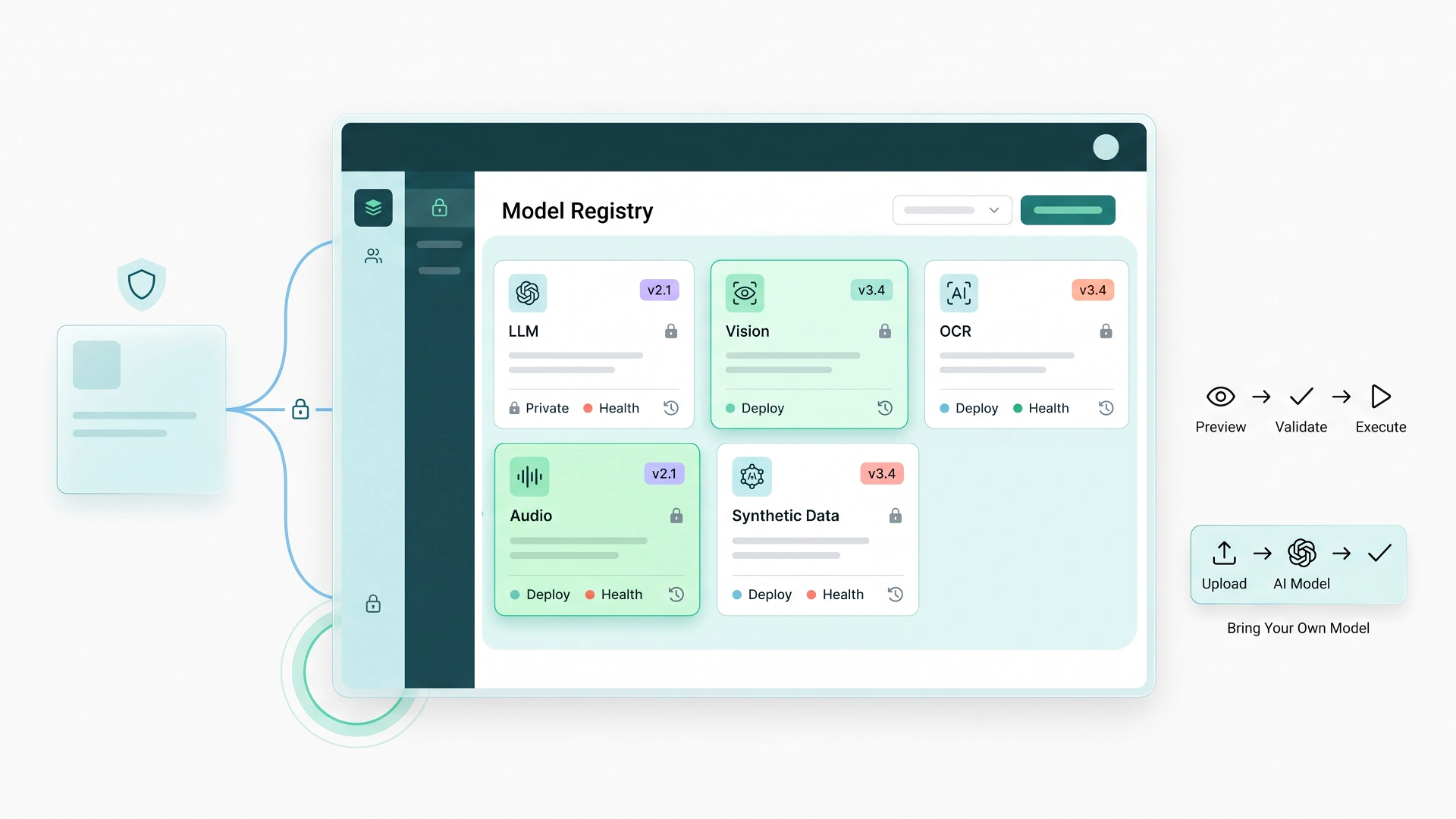
Org Scoped Model Registry (Bring Your Own Models)
A fine tuned generation model stays private to your tenancy and never serves another customer's project, and bringing your own model doesn't require rebuilding the pipeline around it, the same preview, execute, and validation states apply regardless of whose model is running.
FAQs
What synthetic data types does LabelFort generate?
Synthetic datasets cover tabular data and question and answer sets, either prompt only or seeded from your reference CSVs, with typed fields, optional conditioning, preview batches, and validated, exportable records.
Is synthetic data a replacement for annotation?
No, it is a governed complement. Synthetic records fill gaps and protect privacy, while human verified annotation remains the ground truth. LabelFort keeps the provenance of each explicit, so your model documentation can say exactly which is which.
How is generation kept under control?
Preview before execute on every run, record level validation, an org scoped model registry that includes your own models, role restricted access, and audit logging across the full run lifecycle.
How do we tell real and synthetic records apart later?
The distinction is preserved at the record level, not inferred afterward. Every record carries a flag for whether it came from human annotation or generation, so a downstream audit or model card can report the real to synthetic ratio exactly, rather than relying on someone remembering which batch was which.
Related services
Image Annotation
Enhanced precision and reliability for vision based models, with the evidence pack to defend them.
Read More
Video Annotation
Better recall for dynamic events, with continuity that holds across every frame.
Read More
Text Annotation
Robust datasets for stable and accurate language models.
Read More
Ready to evaluate LabelFort against your regulator’s checklist?
Start with the one hour Compliance Review to see how our synthetic data generation fits your regulatory checklist. We scope an evidence grade PoC on your data, under your constraints. No open trials, no pricing games.
Certifications & readiness